
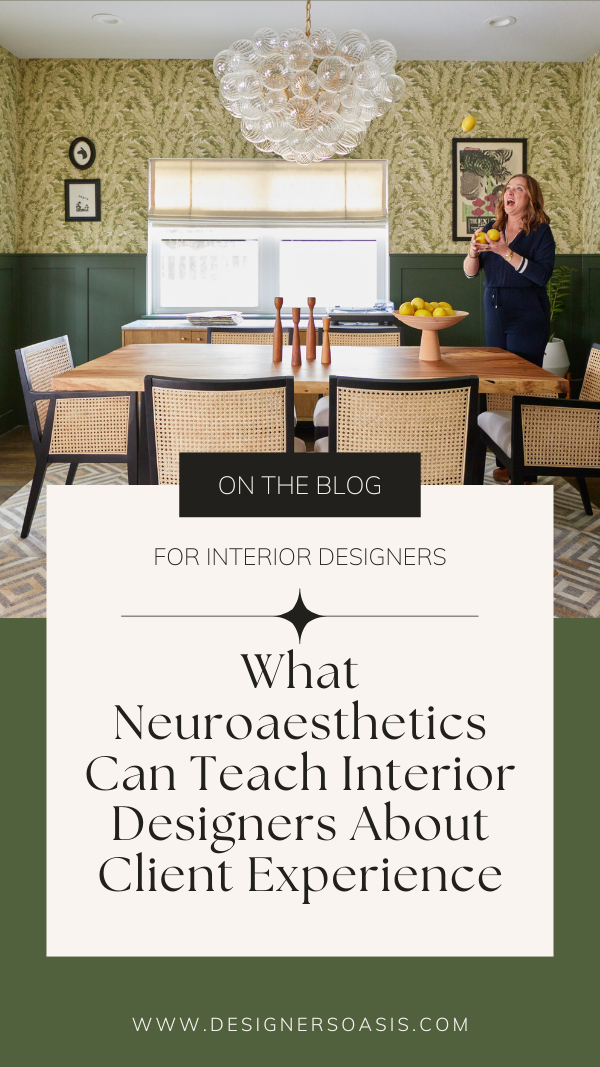
Design has always been about more than what we see.
Because the impact of a space isn’t just visual.
It’s neurological.
Design has always been about more than what we see.
But for a long time, the industry has focused on visual outcomes.
Color palettes. Materials. Layouts. Finishes.
And while those elements matter, they don’t fully capture what makes a space impactful.
Because the impact of a space isn’t just visual.
It’s neurological.
What Neuroaesthetics Actually Is
Neuroaesthetics is the study of how our brains respond to aesthetic experiences.
It explores the connection between environment and emotion.
How certain visual inputs affect how we feel, think, and behave.
For interior designers, this provides a framework for understanding something that has always been intuitive.
Why some spaces feel calming.
Why others feel energizing.
Why certain environments support focus, while others create distraction.
The Shift From Visual Design to Experiential Design
When you begin to understand neuroaesthetics, your work naturally evolves.
Instead of focusing solely on how something looks, you begin to consider how it functions on a sensory level.
How it will be experienced over time.
This doesn’t replace traditional design principles.
It deepens them.
How This Impacts Client Experience
Client experience isn’t just about communication or process.
It’s also about how the final space makes them feel.
When a space supports their daily life in a meaningful way, it changes their perception of the work.
They don’t just see the design.
They feel it.
And that creates a stronger connection.
Why This Matters for Positioning
Designers who understand this are able to communicate their value differently.
They’re not just presenting selections.
They’re explaining impact.
They’re able to articulate why a space will feel the way it does.
And that builds trust.
Bringing Neuroaesthetics Into Your Process
This doesn’t require a complete shift in how you design.
It requires awareness.
Thinking about:
how light affects mood
how layout affects movement
how materials affect sensory experience
And incorporating that into your decisions.
Neuroaesthetics doesn’t make design more complicated.
It makes it more intentional.
And that intention is what elevates both your work and your client experience.
Related Links:
Join me for The Science of Beautiful Spaces Masterclass with Daniel House Club
Learn more about including this process in your interior design work inside the Design Process Masterclass